Emotions vs Logic: Why Good Decisions Need Both
Antonio Damasio's research revealed that emotions are not obstacles to rational thinking — they are essential for making good decisions.
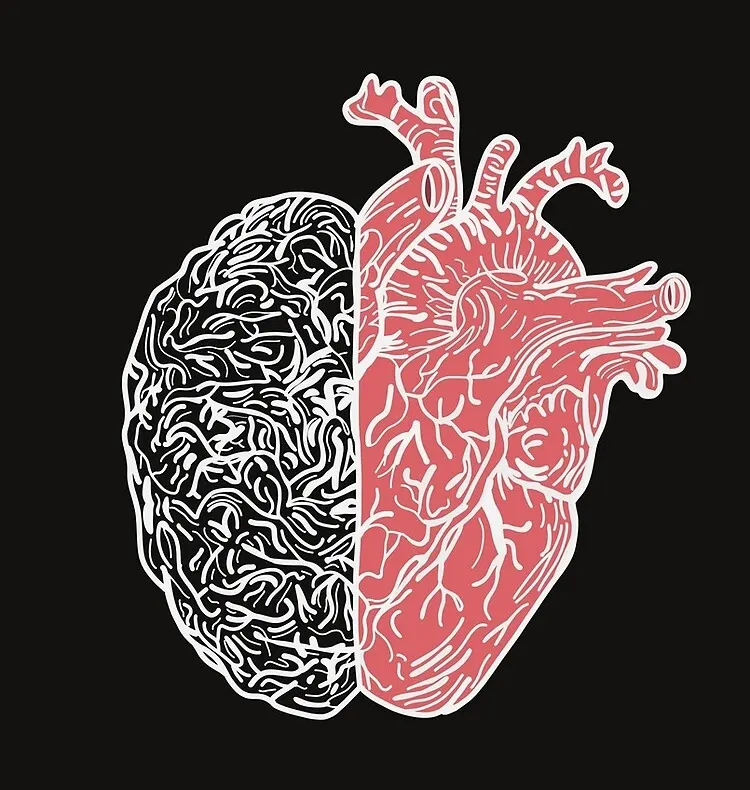
For a long time, emotions and reason were seen as opposites. Logic was considered the reliable path to good decisions, while emotions were viewed as distractions that could cloud judgment. The ideal decision-maker was imagined as someone who could ignore feelings and think purely rationally.
Neuroscientist Antonio Damasio challenged this idea with a surprising discovery:
People without emotions do not become better decision-makers. They become worse ones.
The Patients Who Could Think but Not Feel
Damasio studied patients with damage to the ventromedial prefrontal cortex (vmPFC), a brain region involved in connecting emotions with decision-making.
These patients still had:
- Normal intelligence.
- Good memory.
- Strong reasoning abilities.
- The ability to understand consequences.
Yet they struggled with everyday choices. They could analyze every possible option, list all the advantages and disadvantages, and logically evaluate each outcome — but they often could not decide.
The problem was not a lack of information. The problem was a lack of emotional signals telling them what mattered.
The Somatic Marker Hypothesis
Damasio proposed the Somatic Marker Hypothesis to explain this phenomenon.
The idea is that emotions create internal signals that help guide decisions. These signals, called somatic markers, connect possible outcomes with feelings from past experiences.
For example, when choosing between two jobs, logic can compare salary, commute, and benefits. But emotions provide another layer of information:
- Does this opportunity feel exciting?
- Does something about it feel wrong?
- Does this choice align with the life I want?
These feelings are not irrational noise. They are the brain’s way of quickly evaluating what is important.
Reason and Emotion Are Allies
Damasio’s research suggests that emotions and reason are not enemies.
Logic helps us analyze situations, challenge assumptions, and consider consequences. Emotions help us assign value, prioritize options, and understand what matters to us.
Without reason, emotions can lead us astray. Without emotions, reason can become endless analysis without direction. Good decisions emerge when both systems work together. The goal is not to become purely logical beings. It is to become integrated ones:
Emotion provides the compass. Reason helps us navigate.